
Considering Flight
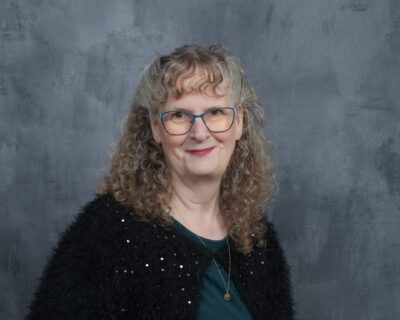
Dreamwalkers, today I’m chatting with the multi-talented Katherine Grace Bond . There’s so much to explore with Katherine. You may know her from the courses, coaching, and community she offers through her business —Labyrinth: A Writer’s Haven. Or perhaps you’re familiar with her young adult novels and bestselling children’s book. But did you know she is also a poet whose work is published in literary journals such as Bellowing Ark, Five Willows Literary Review, and the Chrysanthemum Literary Anthology? Today we’re celebrating the new edition of her breathtaking book, Considering Flight (Goldfish Press) with a special focus on the challenges of loving someone who lives with mental illness. The conversation delves into some sensitive stuff. If you or someone you love suffers from mental illness, please take note of the hotline phone numbers and other resources listed in the conversation below. We all deserve love and care.

“Perhaps the most gripping book of poetry I have read, Considering Flight immediately impressed me with its unusual combination – a true synergy – of technical achievement and raw naked honesty.” — Jerry Austin, Editor, Bellowing Ark
Janet: Welcome to Dreamwalks, Katherine.
Katherine: Hi! It’s wonderful to be here.
Janet: I was thrilled to see this new edition of Considering Flight with the exquisite cover by Lisa Sheets. Your lyrical poems explore a complex father-daughter relationship, mental illness, and family loyalty with rare depth and honesty; I found myself reading them again and again. I’ll bring up a few things that stood out to me later, but first, can you tell us what publishing this new addition has meant to you?
Katherine: Thank you, Janet. Revisiting these poems after twenty years brought up some emotion. But it was no longer the wild sense of danger I felt when I wrote the poems originally. Back then, it felt like I was breaking a family rule to publish these, and I was very nervous about my family reading them. Yet I also felt a kind of hunger to get them out–to say, “This is how it was.” Revisiting them, I think I felt gratitude, both that I had allowed myself to write them, and that they had been so well-received at readings. It seemed a lot of folks could identify with them, even if their circumstances were not exactly the same.
And to be honest, some of them still make me shake.
Janet: I’m glad you took the risk to share the poems, both at readings and through publication. Perhaps the hunger that drove you was a kind of gift. Each time I read the poems, I find new depth. Having loved a family member with mental illness, your words opened doors for me.
Katherine: For the record, Dad was still alive when I published the first edition of Considering Flight, and I did give him a copy. He never talked about it, but I know he kept it by the chair where he read.
Janet: Wow. That’s very moving. It brings up so many issues of secrecy and vulnerability. I was especially moved by the poem “Stalk.” I’d like to post the last few stanzas here so we can talk about it.
Stalk
I found once in his office
a four-page suicide note addressed to me and Tom.
The John McCormack records went to me,
the law school diplomas to Tom,
fourteen at the time.
We were supposed to comfort our mother
whose fault it all was.
He’s still alive.
Why do the flames lick at my stomach even now,
a walking incendiary device?
Every single human being
walks towards me with the face of Christ
I turn them away again and again –
the embryos of them,
the substance of things hoped for,
the limbless children of Iraq,
the soldier on the plane, eighteen,
tell me how proud he was to go and fight.
We’re 911, he said, We’re going to put out the fire.
And he believed it the way I believed
I could hold the thread of someone else’s life
like a kite string tight in my fist
or a stem cut already from its root,
and saving him save my own life as well.
Janet: The entire poem is so powerful. (Read it in full in the book), but I’d like to focus on the ending lines—that strong desire or belief that if we hold on tight enough, we can save our loved ones. I know this feeling well. Can you talk about it here?
Katherine: Wow. I think I’m understanding why I skipped that one at the launch. It still makes me emotional. I want to add here that Dad ultimately did not die by suicide, but by natural causes. (If you or someone you know is thinking about suicide, please call the 988 Suicide & Crisis Hotline for help.)
I think we feel that idea of being someone else’s salvation, because we do partially save them. There is a difference between leaving a loved one entirely alone and spending time with them, encouraging them, taking care of them. Those things really do make a difference in another person’s life. So, I think I’d like to focus on the very last line, “and saving him save my own life as well.”
I think I have often taken on saving someone as an identity. When I was a teenager and a person in my twenties, without as many years of therapy under my belt, I saw saving other people as a mission–a thing I was supposed to do in order to be a good human. Add to that all the religious connotations of “saving,” and there was a whole other layer to the thing. So I believed that if I just kept at it, I could change him. And eventually he did change, due to a combination of factors–the most important of which was seeking help independently.
Janet: The belief that “if I just kept at it, I could save him” was also strong in me in my relationship with my son. Maybe the word “save” isn’t quite it … It was more like a deep desire to heal him. But I learned I didn’t have the capacity to heal his illness any more than I could have healed him if he had diabetes. I could only be present with him. A hard lesson to learn.
Katherine: With my kids, I feel a responsibility to help them have a good life–especially the ones who are more vulnerable or are in a vulnerable period. But Dad was my dad. I often felt angry with him. Dads are supposed to take care of their kids, and I felt he had abandoned me. I loved him fiercely, but there were long periods of time I didn’t talk to him. He was so resistant to getting help. But what I really had not taken in was that he had already had an extended stay in a mental hospital while in college. I don’t know how long it was, and he never mentioned it to me–I only knew this from my mom. She said that overall, he was appreciative of the care he got there. But there was an enormous stigma–especially in the 40s-80s, when he was dealing with all this. Dad was an attorney. He didn’t want that coming out.
Janet: I hear you about the family role – he was your dad. I also know the stigma was so much worse in the 40s-80s. Things are more open now. There’s more understanding that mental illness is a brain disorder, more help for people living with mental illness and for family members. (NAMI has a free 8-week family-to- family educational program and offers Peer-to-Peer support groups for people living with mental illness. Please reach out for support. No one should have to be alone.)
I know the desire to “help” is a good one, but I learned a dose of humility is needed. Over the years, support groups gave me courage to let go with love. My son took action for his life and health. He worked hard, attending Aikido, holding down a part-time job, and volunteering at the shelter.
Katherine: One of the things I’ve had to come to terms with about myself is that I spent a lot of time believing I could control other people. That’s one reason for the anger, I think. It turns out people don’t like being controlled; they are resistant to it. And my response to that was to be mad, because I believed I knew what was best for them. So, on the one hand, I had this heroic image of myself as the sacrificial daughter, but then when he wouldn’t change in the way I wanted, that messed with my sense of effective heroism. And that’s not such a nice image as Angel of Mercy.
Janet: Ha! I’ve been there. I was trying to be the hero in the wrong story. It wasn’t my story. It was their story. I hope you can have some mercy on yourself now as you look back. The challenges you faced brought some hard-won gifts you’re generous enough to share with others through this book and readings. How do the poems feel to you now at this point in your life?
Katherine: I think both you and I are people for whom love is the prime directive. We send it out in the best ways we know how. So I don’t feel either of us did something “wrong.” We just did what we did based on where we were at the time, and motivated by love.
As to the poems, I feel glad I have them–glad I went ahead and put them down on paper. Now that Dad is gone, they give me a kind of emotional record of our relationship and of that time. It can be bittersweet. One of my favorites is probably the longest one, “We Eat at Denny’s Late.” It’s a story of when I finally just broke in front of him. He was on a familiar tirade, and I simply burst into tears. It was not characteristic for me to do this. I usually handled him with humor and a deft change of subject when these harangues started. But it was late, I was exhausted, and I was frustrated to find us “there” again.
But a strange thing happened. He apologized. That had never, ever happened. I had never heard him utter the words “I’m sorry.” It was always someone else’s fault. It floored me.
Janet: I love that moment in the book. One of the most compelling things about Considering Flight is its chronological movement, which lets the reader see the relationship between you and your dad grow over time. To witness a deeper love and acceptance.
The last few lines of “Coda” speak to this.
Coda
I want to stand together
on the stones that marked us both
and gather all the daughters,
all the fathers.
And in that rocky desert we’d begin a ragged hum,
a sound that slopes and catches before winding
upward.
Daughters — hear the hard notes we thought were pain;
they fall and break open at our feet.
Fathers — hear the daughter-song that flows across your shoulders;
let it make light of the worlds you carry.
This is a story of standing,
of the lullaby that wakes us
with its wind, swirls,
sings so that we suddenly
take flight.

Katherine: Thank you for inviting me–and for treating the poems with such tender, loving care. I also want to acknowledge Koon Woon, my publisher and my dad’s best friend, who passed Thursday, August 13. May he rest in peace.
Janet: I was sorry to hear of Koon Woon’s death, Katherine. Many months ago, you told me he was in the last stages of cancer when he published this book — a lasting tribute to your dad. May your soul be free, Koon.
Before we end our talk, I’d like to let Dreamwalkers know you’ll be doing some local readings over the next few months. Can you list them here?
Katherine: Sure. I’ll be a featured reader at the following in-person venues. Come along, and if you have poems to share as well, sign up for the open mic!
It’s About Time Reading
Thursday, November 12, 6-7:45 PM, Ballard Library, Seattle, WA
Everett Poetry Nite
Monday, December 28, 5-8 PM, The Sisters Restaurant, Everett, WA
Duvall Poetry
Tuesday, February 2, 7-9 PM, Duvall Train Depot
(This one is dear to my heart, because I started this reading in the early 2000s and hosted it for eight years.)
Janet: Thanks for the dates. Katherine also has a newsletter to let people know about readings, Labyrinth Workshops, Coaching, Developmental Editing, and other cool stuff. She’d love to have people jump on board. To access the newsletter, click “Join the Adventure.”




Thank you, Katherine and Janet, for opening your hearts in conversation. There continues to be far too much stigma surrounding mental illness and I appreciate your candor and wisdom. And so true, Janet, how often we try to be the hero in the wrong story!
Thanks for your kind words, Trudi
I wonder if trying to be the hero in someone else’s story is a more common flaw among authors.
Janet
Did you two ever know that you’re (two of) my heroes? Thank you both for this open, raw, grace-gifting conversation.
Thank you, Margaret for your supportive presence and your grace-gifting comment here.
Katherine’s book opened some doors. I’m glad we stepped through together.
Janet
~ Such a tender conversation about a topic that can be very painful to address, especially with strangers. Fortunately, your poetry book, Katherine, can lighten the emotional load for those of us that have experienced similar challenges in our families. Thank you, Janet, for bringing attention to Katherine Grace Bond’s writing. ~Blessings to both of you…and thanks.
I’m so glad you got a chance to read this Dreamwalk, Heidi. Thanks for the kind words. Katherine’s poems create a space to feel for ourselves and our loved ones with deeper understanding.
Thankyou Katherine for your vulnerability in publishing such private poems.They are beautifully touching,especially the phrase” holding someone’s life like holding onto the string of a kite.”
I am so looking forward to attending one of your reading gs and purchasing a copy of your book.
Thanks for the kind comment, Jill. I’m glad to hear you’ll be getting a copy of this amazing book.
Amen, I encourage everyone to buy a copy of this insightful, instigating book. And write a review or two wherever you look for book reviews.